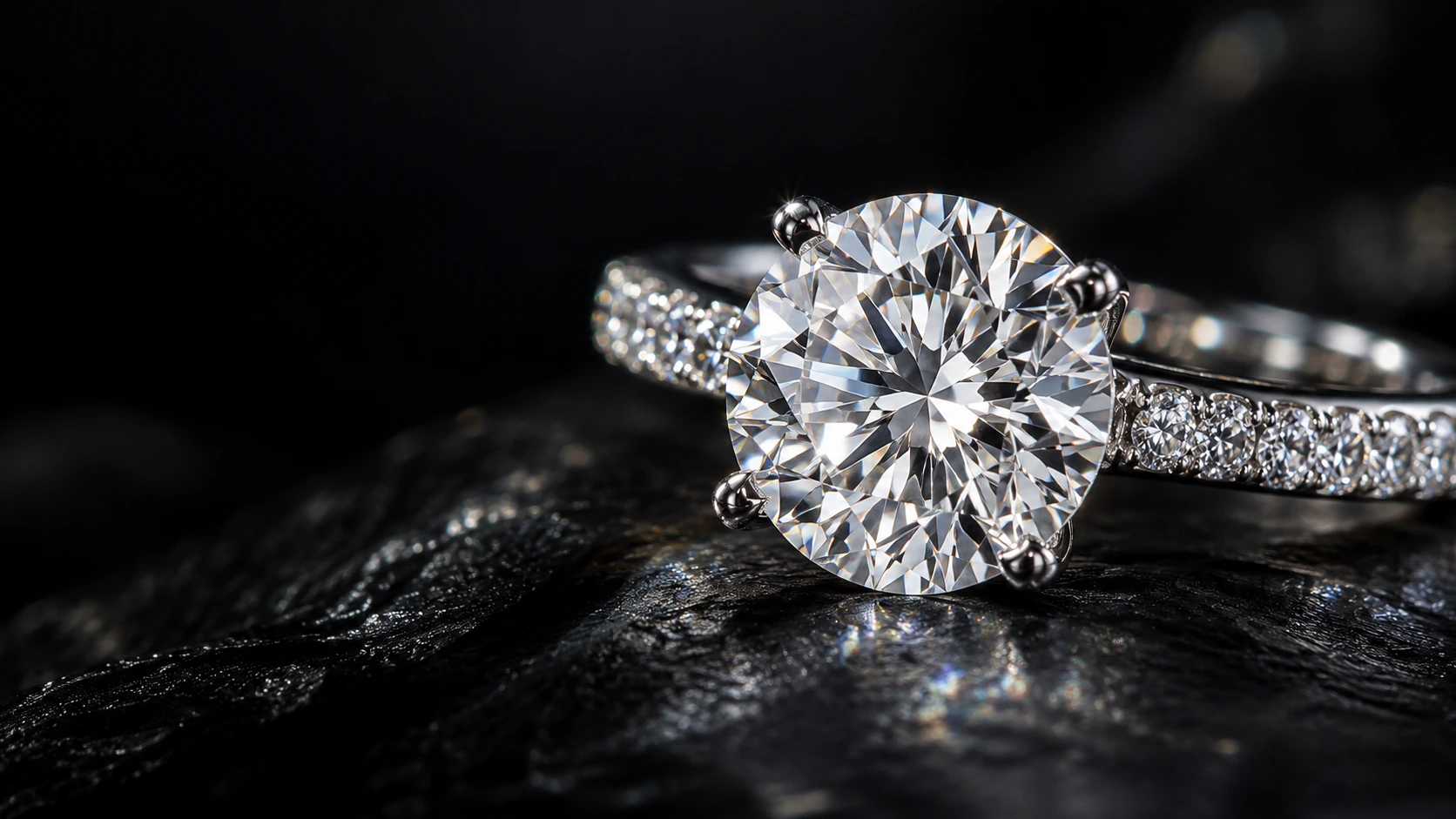
Know the diamond.
Find your brilliance.
A clear guide to the details that matter, so you can choose with confidence.
Explore the 4Cs ↓Four characteristics.
One personal choice.
Cut, colour, clarity and carat weight describe a diamond’s quality. Together with shape, origin and your budget, they help you compare stones thoughtfully. A grading report tells part of the story; seeing the diamond completes it.
Where light
comes alive.
Cut quality describes how a diamond’s proportions and craftsmanship influence its interaction with light. It is different from shape: an oval is a shape, while cut quality concerns the finished stone.
- Brightness
- The return of white light.
- Fire
- Flashes of spectral colour.
- Scintillation
- The pattern of light, dark and sparkle as the stone moves.
GIA’s overall cut scale for standard round brilliant diamonds in the D–Z range runs from Excellent to Poor. Fancy shapes need individual assessment of their proportions and appearance.
Explore GIA’s cut guide ↗A spectrum
of subtlety.
For diamonds in the normal colour range, the D–Z scale describes the degree of colour present. D is colourless; toward Z, yellow or brown becomes more noticeable.
Small differences can be hard to see once a diamond is set. Compare actual stones in consistent lighting and consider your preferred metal. Fancy-colour diamonds are evaluated differently.
Explore GIA’s colour guide ↗The details
within.
Clarity considers internal inclusions and surface blemishes. Skilled graders assess their size, number, position, nature and visibility under 10× magnification.
The scale runs through FL, IF, VVS1–VVS2, VS1–VS2, SI1–SI2 and I1–I3. A higher grade means fewer or less noticeable characteristics under grading conditions.
“Eye-clean” describes appearance to the unaided eye, not an official clarity grade. Check each stone individually, particularly in larger diamonds and open step-cut shapes.
Explore GIA’s clarity guide ↗Less visible characteristics → More visible characteristics
Weight is only
part of the picture.
One carat equals 0.2 grams and is divided into 100 points. A 0.50 ct diamond is a fifty-point stone. Carat measures weight, not diameter.
Two diamonds of the same weight can look different in size because of shape, depth and proportions. Compare the report’s millimetre measurements as well as carat weight.
A larger diamond does not automatically have better colour, clarity or cut. Choose the balance that suits your taste.
Explore GIA’s carat guide ↗Find your shape.
Shape is the outline of the stone. Choose the silhouette you love, then evaluate the individual diamond.
Round
Classic circular silhouette
Oval
Soft, elongated outline
Cushion
Rounded corners
Emerald
Rectangular step-cut style
Asscher
Square, clipped corners
Radiant
Clipped-corner outline
Princess
A crisp square silhouette
Pear
A teardrop outline
Marquise
Elongated, pointed ends
Heart
A romantic silhouette
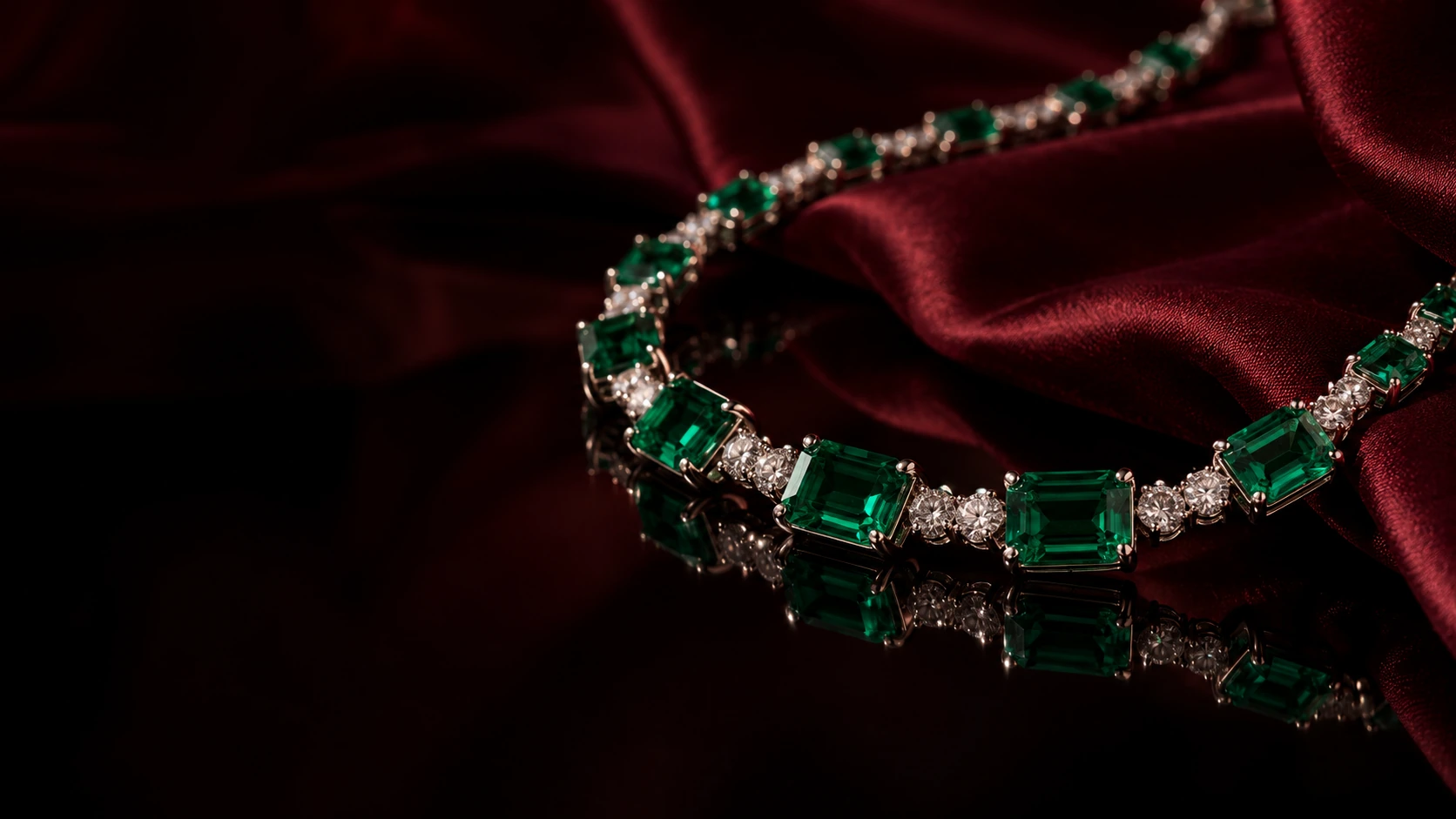
Natural or lab-grown?
Both are diamonds. Laboratory-grown diamonds have essentially the same chemical composition and crystal structure as natural diamonds, but a different growth origin. They are distinct from simulants such as cubic zirconia and moissanite.
Natural diamonds
Form through geological processes within the Earth. Their natural origin is an important part of the choice for many buyers.
Lab-grown diamonds
Grow in controlled conditions using technologies such as CVD or HPHT. Origin should be clearly disclosed.
Choose based on origin preference, appearance and budget. Specialist laboratory testing can distinguish the two; appearance alone is not enough.
Read GIA’s origin guide ↗Read the report.
See the stone.
Confirm identity
Check the report number with its issuing laboratory. Compare the stone’s measurements and inscription, where present.
Understand the details
Review origin, weight, colour, clarity, proportions and any treatments stated. Report formats differ by laboratory and diamond type.
Compare appearance
Request clear photographs and inspect under different lighting. A report documents characteristics; it does not replace viewing the stone.
Ask the right questions
Confirm the final price, setting specifications, delivery estimate and applicable return or warranty terms before ordering.
Your questions, answered.
Which C matters most?
All four contribute to the comparison. For round brilliants, cut quality is central to light performance. Your priorities and budget determine the final balance.
Does colour determine sparkle?
Colour describes body colour. Sparkle depends on cut, light and movement; a higher colour grade alone does not guarantee stronger sparkle.
Is a diamond unbreakable?
Diamond resists scratching exceptionally well, but can chip under impact. Protect exposed corners and have the setting checked regularly.
Can I choose a diamond for a custom piece?
Yes. Start a bespoke brief with your preferred shape, origin, carat weight and budget. Final stone and setting specifications need confirmation before production.
Knowledge meets
something personal.
Explore diamond jewelry or begin a brief for a piece made around your preferences.